


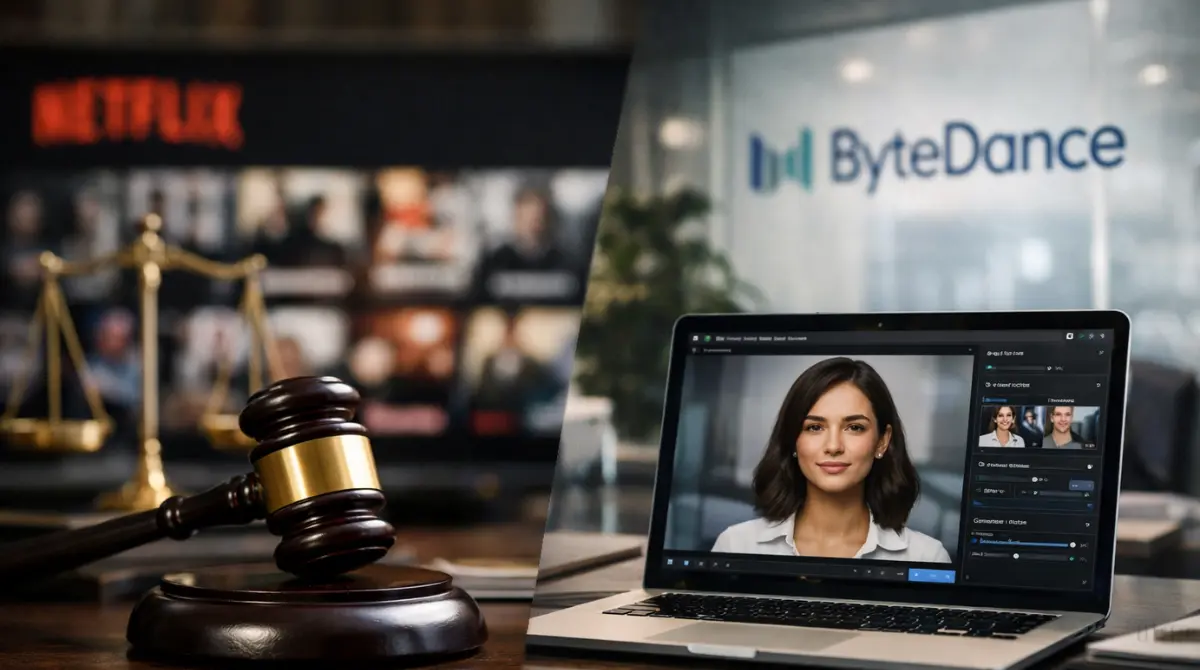

Netflix has escalated its response to Seedance 2.0 by sending ByteDance a cease-and-desist letter that threatens immediate litigation. The company argues the tool is producing unauthorized derivative videos that draw on Netflix characters, worlds and scripted narratives and it set a three-day deadline for a formal reply.
The letter’s demands go beyond removing specific clips. Netflix told ByteDance to purge Netflix intellectual property from training datasets and implement guardrails designed to block future infringement, signaling the dispute is also about how Seedance is built, not only what users publish.
Netflix cited alleged examples involving Stranger Things, Squid Game, Bridgerton and KPop Demon Hunters, including claims of circulating videos that closely reproduce cast likenesses, monsters, costumes and signature visual styles. It also asserted that some user-made crossovers insert real-world figures into Netflix settings.
ByteDance said it would add additional protections to prevent unauthorized uses of copyrighted works and actors’ likenesses. Netflix also attempted to preempt a fair-use defense, arguing that a competing commercial product that effectively regurgitates originals should not qualify.