



Strait of Hormuz oil Disruption Pushes Oil Markets Toward $100 as Tankers Stall
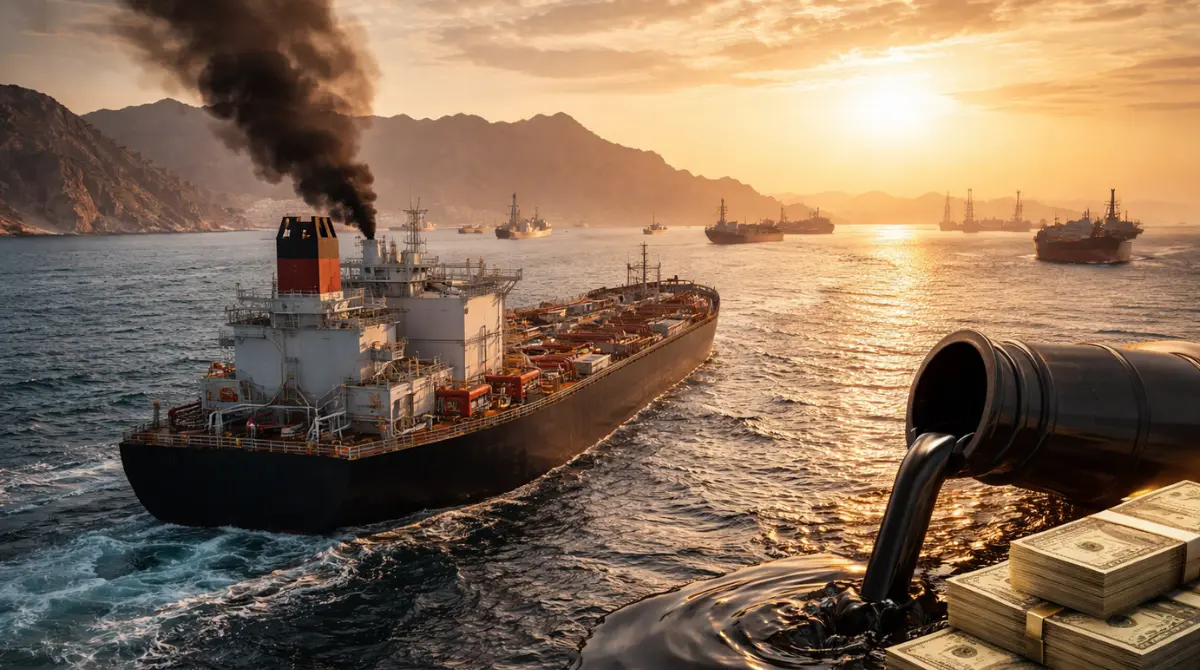
The Strait of Hormuz has become the fault line between Middle East conflict and global oil prices, with hundreds of tankers anchored on either side after shipowners suspended voyages amid escalating hostilities between the U.S., Israel and Iran.
Brent crude climbed from roughly $73 per barrel on Friday to around $80 at the Asia open on Sunday, with some market projections pointing toward $100 per barrel if the waterway remains effectively closed.
The disruption centers on two practical constraints: vessel safety and insurance availability. Even ships willing to transit face difficulty securing voyage coverage, stalling export flows regardless of production decisions.
OPEC+ announced an April output increase of 206,000 barrels per day across eight member states. Analysts, however, consider the move largely secondary given current conditions.
The Strait handles roughly one-fifth of global oil supply
A sustained closure could remove 8 to 10 million barrels per day from markets
Saudi Arabia’s East-West pipeline and an Abu Dhabi route offer partial bypass capacity only
Asian economies face compounding pressure. Most are net oil importers and currencies including the Indian rupee, South Korean won and Philippine peso carry higher exposure. Analysts estimate every $10 per barrel increase reduces current account positions by 0.2% to 0.9% of GDP across the region.
Physical route access, not production quotas, now determines how quickly supply reaches end markets.