


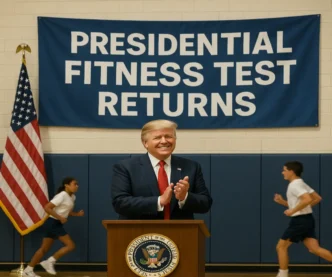


President Donald Trump has signed a new executive order reinstating the Presidential Fitness Test, a once prominent school physical assessment program that had been phased out more than a decade ago. The initiative is part of a broader campaign to reintroduce traditional health benchmarks for school aged children across the country. The original test, created in the 1960s, was intended to boost youth fitness in response to national concerns over declining physical standards. It included tasks like timed running, push ups, flexibility tests, and other exercises that measured core strength and endurance. The program was eventually replaced in 2012 by a more personalized fitness evaluation that emphasized overall wellness.
At the signing ceremony, Trump emphasized the need to rebuild discipline, competitiveness, and physical resilience among American youth. “We want our kids to be strong not just smart, but strong,” he declared.
The reestablished President’s Council on Sports, Fitness & Nutrition will manage the program’s rollout. Athletes and celebrities such as golfer Bryson DeChambeau, wrestler Paul “Triple H” Levesque, and NFL kicker Harrison Butker were announced as members of the revamped council. Some appointees sparked controversy due to past legal issues, but the administration defended their involvement as inspirational.
Health and Human Services Secretary Robert F. Kennedy Jr. will oversee the council’s operations. Beyond school testing, the group will also advise on broader issues in youth and college athletics, including athlete rights and nutritional guidance. While some educators welcome the renewed focus on physical fitness, others caution that performance based evaluations may stigmatize students or overlook personal health needs. Experts urge that the program be supplemented with supportive instruction and inclusive strategies to ensure that it encourages long term wellness rather than short-term competition.